5 Under the Radar Magical Series on Netflix

5 Under the Radar Magical Series on Netflix

Netflix is a window to the outside world for a lot of us right now. With high profile series like The Witcher, it’s also a window into magical worlds.

Here are a few other series with magic you might’ve missed and that I’ve given that little thumbs up to:

1. The Haunting of Bly Manor

Based on works by Henry James, Bly Manor has the series’ trademark hidden ghosts in the background. It’s more of a love story than The Haunting of Hill House, and may very well break your heart, but it can genuinely make you jump, too.

Don’t be fooled by that! A mysterious spell, rooted in the words of a woman who turned away death in his carriage, lends fantasy, and a whole lot of conflict, to this superb story.

2. Shtisel

A quiet family drama about the Haredi Shtisel family, headed by the stubborn Rabbi Shulem and complicated by his wayward but talented painter son Akiva, has won a lot of hearts. But key moments of the series feature magical realism, from a dream that predicts a cold snap and brings the possible love of his life to Akiva’s door, to a mysterious little boy who inspires him to keep painting.

3. The Bride of Habaek

Korean dramas are the BEST. This one can be surprisingly slapsticky, silly and painfully awkward. It’s also weirdly habit-forming. Though fans of the original manhwa were apparently disappointed in this modern-day loose adaptation, I enjoyed it and am firmly team Mr. Shin.

The premise: An overwhelmed therapist (the messy-haired, going-it-alone Yun So-a) discovers she’s a divine servant when pompous god Habaek shows up with his servile servant and demands that So-a help him complete his divine quest. Surely they’re both delusional. But when Habaek claims a starlet is really a goddess, an old classmate (or two) turns up and brings trouble, and the divine realm’s dirty laundry slowly comes to light. So-a is about to discover that rent payments aren’t the only thing that has her in over her head.

4. Castlevania

This animated series isn’t for the kiddies. Humans can be as bad as monsters, and fallen nobleman turned monster-hunter Trevor Belmont knows that better than anyone. Based on early games in the video game series, expect violence and other adult content alongside the magic.

5. Rilakkuma and Kaoru

This feel-good series follows a woman whose lonely days are changed by the arrival of mysterious beings in bear costumes and their bird friend. Created from the famous Japanese characters, it’s the perfect bit of magic added to an office worker’s everyday life. The tactile animated world feels both cozy and magical all on its own.

Bonus (Not a series, but I had to share!):

Mary and the Witch’s Flower

This animated masterpiece will please Studio Ghibli fans. An ordinary girl gets caught up in a magical school’s nefarious side when a flower turns out to be the most dangerous thing in the world.
The (overwhelming) truth about releasing an indie book

The (Overwhelming) Truth About Releasing an Indie Book

It’s been a wild 9 days.

Wow. Only 9 days?!

After dipping my toes into the self-publishing world, I released my first full-length novel on January 15th. There were a few differences this time, like that I chose wide distribution (making my book available at many retailers) instead of just Amazon.

Here’s what I’ve learned so far:

1. Mistakes will be made.

There will never be enough time for last minute read-throughs (and there will be last minute read-throughs). Typos will sneak in, details will be overlooked, and if you’re lucky, you’ll notice them before it’s too late. But guess what? It still won’t be perfect.

Authors with proofreaders, editors, beta-readers and every other professional tool still have mistakes in their books. Traditionally published books have them, too. Take a deep breath, accept it and make a note for your next update. As an indie author, you can change anything you need to.

2. Formatting will be your biggest Challenge.

Accept that the version of your manuscript you format for Amazon KDP will look different than files from other programs (if you use Amazon’s preferred Kindle Create program). Other booksellers may not allow set fonts for chapter titles and other special touches.

This is why I have different editions noted in my copyright page, depending on the bookseller. I list the differently formatted edition as Kindle Edition, Smashwords Edition and a generic digital edition for others without special formatting (Smashwords actually requires the formatting and the language both). I had to do it this way, in the end. Trying to keep my tidy chapter headings and title page only led to frustration and some emails back and forth with customer service.

File converters are not perfect. My chapter headers in particular looked weird when put through the file format converters, and in some cases had unsightly (unprofessional) indents. The end result was not at all like my KDP file. I was ultimately referred to a professional formatter by one site (not in the budget just yet, but looking more appealing all the time!).

Not simple but necessary: File converters can result in unexpected complications—and headaches.

Some file converters offer more options and instructions, though. If you choose a distributor like Smashwords, you will need to save some time to format to their style guide because of it. There is a literal style guide available for download, and while reading it (and obeying it) is very necessary, it’s not as bad as it looks on the outset.

Bonus: when I had formatting issues with another distributor, uploading a version of my file that had received the Smashwords treatment helped resolve some of the formatting issues.

3. It will take longer than you think…and you’ll Wish you could go back to just writing

Okay. Take another deep breath. I am currently in this stage myself. It will all be okay. Soon enough, you’ll be back to endless rounds of editing and trying to remember that perfect word you need, which may or may not actually exist.

The advice from, oh, everywhere, is that practically no writer gets excited about working on their platform. We’re writers. Writing is what we want to do.

Book releases are like platform-building on overdrive.

While I’m still stuck playing catch-up on the promotional whatnot of my book release, I know I’ll be writing again soon. Lack of patience is my biggest weakness as a writer. I suspect that’s true of a lot of creative people, not just writers. If you’re excited about what you do, new ideas and working on what’s next, the last thing you want bogging you down is a W9 and ads that just don’t pop.

For some strange reason, all of that is part of the job, though. And a lot of it will be an ongoing project, just like the books you write.

So take one more deep breath, think of all the skills you’ve acquired in your years of writing, and remind yourself that these are just a few more.

Cheers! And good luck to all you writers out there.

-CKB


P.S.: As proof that indie writers have more flexibility, my book has a new cover! Stay tuned for the cover reveal for the sequel to Girl of Shadow and Glass, Girl of Glass and Fury.

Girl of Shadow and Glass release day!

You can get this (new adult dark fantasy novel)!

At long last, my first novel is here! I’ll be keeping the price at 99c for a short while to celebrate and because, you know, marketing.

If you’re still not sure if this book is for you, you can now head over to Smashwords to download a free sample in your preferred file format!

Getting this novel out was a really surprising process for me in so very many ways. I never thought I’d have quite so many file conversion issues! Luckily, I got it all sorted in time and there will be even more retailer options in the days to come.

I would like to say I can relax now, but there’s always more to do. I do hope to be back at work on revisions for the next book in the series, Girl of Glass and Fury, sometime next week.

So what am I looking forward to most? Reading, of course! I barely started Elm Vince’s Tapestry of Night before crunch time started (I previously reviewed a book she co-authored with Helena Rookwood, Throne of Sandand snatched up her debut solo book when it came out)I can’t wait to get back to it. Plus, reading before bed is one of my favorite things. (Not sure my puppy cares for it, though!)

I’ll have more news in the coming days, including about my newsletter exclusive serial novel. Till then, stay healthy, everyone!

-CKB
Author of Girl of Shadow and Glass
😊

Girl of Shadow and Glass is almost here!

I’m happy and relieved to say I just turned in my manuscript for the Kindle edition of Girl of Shadow and Glass! Woo! The ebook is available for 99c for a limited time.

In the coming days, Girl of Shadow and Glass will be available on other retailers, but you can check out this handy universal book link and see where to get it now.

For those of you who don’t know, Girl of Shadow and Glass has its humble beginnings in my first foray into epublishing, the novella A Shadow in Sundown. This release is a completely redone coming of age tale, and will be my first novel.

Also to come, I’ll be making the first several chapters available for those who sign up for my mailing list. Till then, take care.

Go Bills!

-CKB

Thanksgiving already?!

Happy Thanksgiving to all the American readers out there. I can hardly believe it’s that time…partly because I was convinced the holiday after Halloween was Christmas for a minute there.

It’s been a year. My thoughts will be with those of you who will be missing somebody, or just celebrating alone.

We’ll be having a quiet holiday, enjoying the dog show and trying to get our dog interested in the roast turkey squeaky toy we gave her last year. This is my second Thanksgiving with the delightful pupper, my first dog in almost 20 years! (Which, if you’re wondering, is waaaayyy too long!)

On to the news!

Comics – You’ll find a brand new edition of Social Isolation right here. I’d love to put more content out in this category, but with everybody home the family tablet is in VERY high demand!

Blog – For all my fellow writers out there, my 3-part series, Use Contrast to Create Depth in Your Story, concluded last week. I hope to have more posts like it soon, but right now I have a few reviews to catch up on!

Seriously.

What I’m reading – An advanced reader copy (in exchange for an honest review…you know the deal!) of Helena Rookwood’s fabulous The Thief and the Throne. A while back, I reviewed the first book in the Carnival of Fae series, The Prince and the Poisoner, and I fully expect I’ll have the same level of gushing admiration for this one. Loving it so far.

I’ve read so many books in this pandemic…way more than I ever thought I would. And that’s nearly all thanks to ebook loans from my county library. I made this little graphic to celebrate that and all the things that make such an odd and frequently awful time better. I find that on a sad day, a little WeRateDogs can still make me smile.

What I read last – Mexican Gothicby Silvia Moreno-Garcia. If you haven’t read this one yet, do NOT let anyone spoil the plot twist for you!

Till next time!

Cheers,
CKB

Contrast, Part III: Lessons from Bestselling Books

Welcome back to the last of this three-part blog series on how contrast makes for a great read. In this post, I’ll also touch on how classic techniques from another genre made a story more exciting.

Use Contrast Part III

III. The contrast of a known commodity and a total mystery

Want to keep the pages turning? Take a look at what Bethany C. Morrow did with her two teen narrators in A Song Below Water(You can also find my review here.)

Being a siren is dangerous—hated, too. Tavia is a black teenage girl dealing with how the world perceives and treats her. She’s also a closeted siren in fear of being ripped from the too-safe world her father created. To her father, the worst thing that could happen is if everyone found out who Tavia really is.

And then there is A Song Below Water‘s other narrator, Effie. Effie swims like a dolphin, suffers from itchy, dry skin that no lotion in the world can correct, and, for a few days every year, dons a mermaid tail. But that last part’s make-believe for a Renaissance fair. The rest of the year she’s (cheesy pun warning) a fish out of water.

Shy and in pain from the loss of her mother, Effie has never known her father. It’s clear that something is going on with her, but she has no idea what. The survivor of a frightening event, the strange and scary just keeps following her. Tavia knows exactly what can go wrong. Effie can’t even guess.

That undercurrent of fear and mystery helps keep A Song Below Water moving at a brisk pace. It borrows a few tricks from the mystery and horror genres to do so.

With Tavia, we immediately know she is under threat. Tav knows what could happen, and she has to stay one step ahead to stay safe. Will she ever stop running and confront what stalks her? With Effie, on the other hand, we see the wary detective on a case too close to home, full of the drive to know and the fear of what she’ll find. The few clues she has make no sense, and those who could help her aren’t talking.

Instant suspense. That tension is key to keeping the reader engaged.

The Lesson: The relationship between these two found-family sisters is beautiful. But the contrast between them—their opposing but equally anxious what-ifs as they question themselves and their world—keeps the reader moving in dogged pursuit of the outcome. A Song Below Water showed me a new rule for writing:

For every character certain of their abilities and who they are, there should be another who hasn’t got a clue.


That’s all! Thanks so much for joining me. I hope these posts will help you to take another look at your own favorite books. Write on!

Contrast, Part II: Lessons from Bestselling Books

Welcome to part 2 of 3 of this blog post series. Today I’m looking at the mind-bending, plot-twisting effect that differing beliefs about a beloved character can add to a story.

Use Contrast Part II

II. The contrast of how a character is perceived/how he perceives himself

This form of contrast can add depth to both plot and individual characters. The City of Brass is a masterclass in it.

Protagonist Ali is a morally upright (some would say uptight) djinn in S.A. Chakraborty‘s first-in-series novel. He’s wholesome and good amidst political schemers and tales of bloody sieges. He’s not without a temper and he can be subversive—if it’s for what’s right. But for a prince, he’s not great at politicking and pretenses. In fact, he’s easily fooled. Even Nahri, the story’s fellow narrator, can’t help but go against her streetwise, suspicious nature when she gets to know him.

Then there’s how others view Ali: he’s a zealot, a bigot, a person who’s unbending and who can be uncaring of those who don’t fit his world view (in this case, an entire tribe he’s supposed to protect). In the eyes of those in power, that makes Mr. Play-by-the-Rules as potentially dangerous as the rebels threatening Daevabad. (Reminder: he really is a protagonist. Right?!)

As contradictory as those views of Ali are, it’s all true. Ali gets to be the hero of his own story. He knows he has faults, but doesn’t see them all or understand they’re that big. Is he biased against the djinn? Sure, but to him they’re fire-worshippers; that goes against God’s law. In Ali’s mind, it’s all justified. He’s an upstanding citizen and a man of faith, a person trying to do what’s right. He certainly doesn’t realize other people’s view of him is so different from his own. Even when warned, he doesn’t get it.

At the same time, people close to Ali are swayed by their feelings and don’t perceive all of him. Which means everybody, including Ali, can’t possibly have all their expectations met—especially anyone who wants him to change. It’s realistic, and it’s a major plot point just waiting to happen.

Better still, he’s not the only central character who gets this treatment.

The Lesson: The City of Brass makes a theme of perception versus reality. This drives the plot effectively, and both the story and characters reach ever-greater depths because of it. The reader never quite knows what to think—and it makes The City of Brass so interesting, even after the last page is turned.

This technique is also perfect for a series. I still don’t know what to make of the characters in The City of Brass, and have been forced to reserve judgment until I read the other two books. Which means I feel that much more compelled to do so.

In short, if you want to add depth, interest and potential intrigue to your plot and characters, let one of your primary characters be the hero of his or her own story—and let the others disagree (or at least feel a lot less sure about whether that’s true).

This blog series concludes next week with Part III. See you then!

Contrast, Part I: Lessons from Bestselling Books

Over the next three weeks, I’ll be sharing some writing tips I picked up. Where did I find them? In some very famous books by skillful authors, books I couldn’t stop thinking about.

I wanted to know just what made these books so memorable, and what drove me to keep turning the pages. Some of it has to do with a generous helping of mystery, and some of it, like today’s tip, comes from a look into a character’s past. But after thinking about it, I noticed these books all have one thing in common: well-developed characters that leap off the page and plotlines that strike a chord. And to make that happen, the authors used contrast.

This is the first of three types of contrast that helped bestselling writers build deeper, more memorable stories and characters.

Use Contrast Part I

I. The contrast of innocence and (cruel) reality

In this lauded work of historical fiction, the contrast between the characters’ innocence and reality drives the main character’s choices and creates the book’s theme.

In The German Girl, by Armando Lucas Correa, heroine Hanna shares a free-roaming, adventurous childhood with Leo, who swears he will marry her as soon as they’re old enough. In the midst of being forced out of their homes by Nazis, their relationship is sweet and wholesome—with an almost inevitably tragic end. But it doesn’t truly end there.

Hannah carries Leo with her throughout the rest of her life. Through every atrocity she sees and no matter how she suppresses it, that bittersweet memory is there. Leo is a force long after he’s left the story, their innocent love representing everything that is simple and good.

This does three things: anchors the book in a relatable emotional core; portrays Hannah as more than just a victim (she gets a life of her own affected by but predating the forces of the story); and provides respite from (and therefore depth to) a tragedy.

That contrast is how the cruelty in The German Girl becomes more than just acts of outright evil: it’s also found in the indifference of the people around Hannah. If we never saw what no-strings-attached caring looked like in the story, that theme would be weaker and easily missed.

Here’s another example of it working, this time from the fantasy genre. In George R.R. Martin’s A Song of Ice and Fire series, innocence versus cruelty is the reason the Hound’s attachment to Sansa lifts her storyline: it’s a break from the almost unending selfishness and cruelty in King’s Landing. If there is no touch of relatable innocence, all that backstabbing and abuse of power blurs together.

This contrast humanizes the Hound (there’s a heart in there somewhere) and gives supposed good guy/victim Sansa a critical flaw (she can’t see past how ugly and scary he is. Cersei ain’t the only selfish gal in King’s Landing).

See how innocence versus cruelty brings more to a story than just good versus evil?

The Lesson:  Innocence is something everyone relates to. It triggers the reader’s reflex to be protective, which makes the reader invest in the character’s fate. The Hound becomes unforgettable in an onslaught of characters and names. The German Girl leaves an indelible mark, but it’s pure-hearted Leo and his relationship with Hannah—the way these innocents only wanted to live a normal life together—that breaks readers’ hearts the most.


That’s all for now! See you next week for Part II.

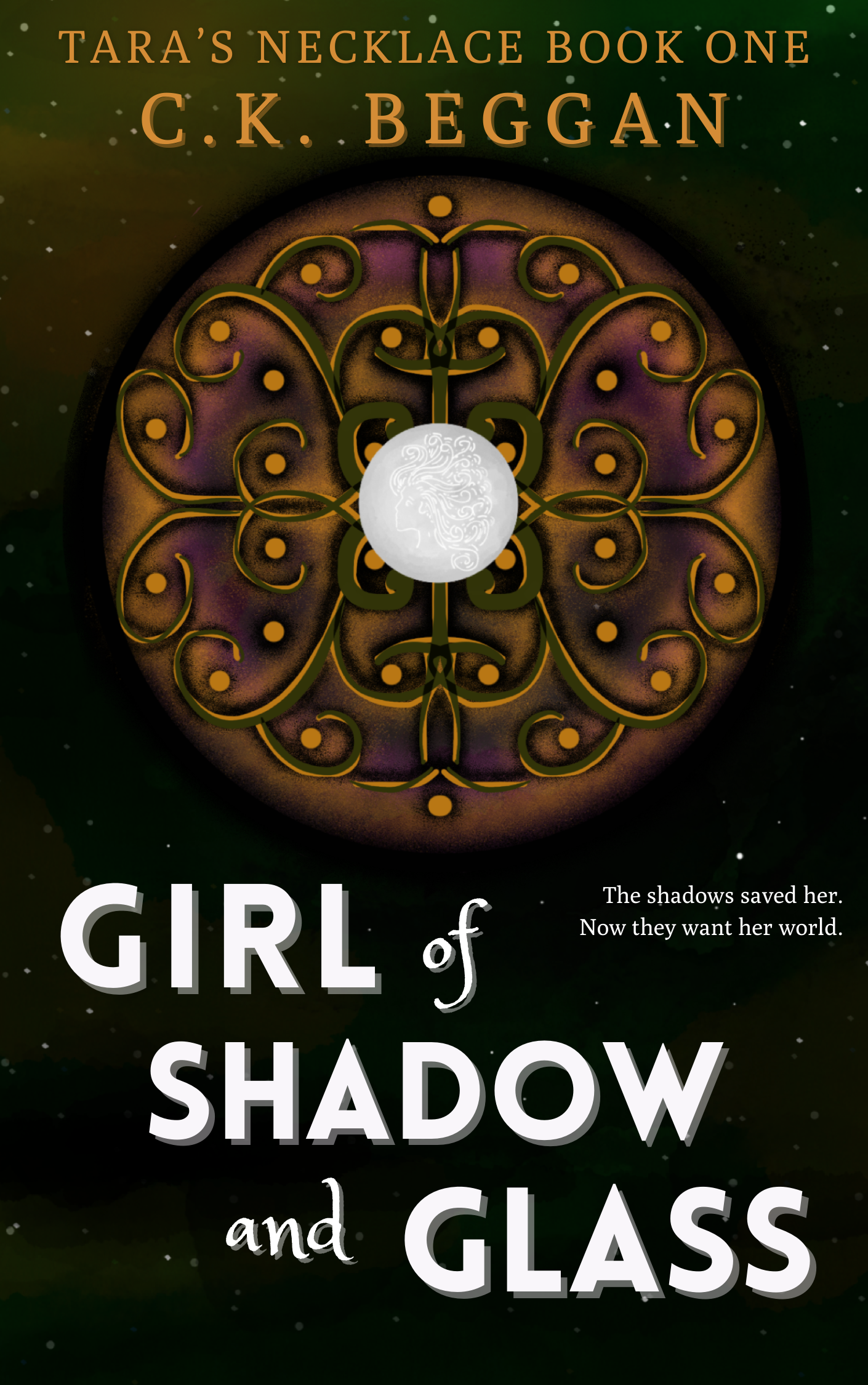
Girl of Shadow and Glass Cover Reveal!

Available for Pre-Order on Amazon soon!

So…what do you think?

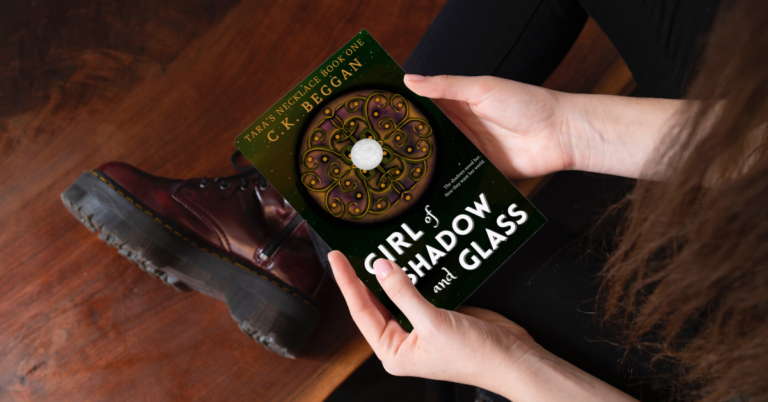
To me, this cover is much sharper than my novella cover, and fits the New Adult genre better. I love that it reflects the sci-fi elements of Girl of Shadow and Glass, what I’d call a world-hopping coming-of-age fantasy.

I’m so excited to share it with you all…but you’ll have to wait until January 15th, 2021! 

Till next time. Cheers!

-CKB

New cover, new title…coming soon!

My first full-length novel is on its way!

Girl of Shadow and Glass will be the first novel in the New Adult Tara’s Necklace series (formerly the Open World Series). For those of you who might’ve read A Shadow in Sundown, it will sound familiar and new all at once.

The description:

Six days. Two worlds. When it’s through, Kith Canto’s life will never be the same.

Born into a world of droughts and fading magic, Kith is destined for an unremarkable life, but for one thing. Six days a week, she crosses the gate between Sundown and its neighboring world, where she breakfasts with shadows.

The shadows teach Kith, telling her stories of worlds abundant with life. But Sundown is different. There, Kith is a shade-child, a fragile-bodied outcast with no hope of finding love or leaving her parents’ home.

Then a handsome young man shakes up Kith’s life, just as the shadows begin to teach a forbidden subject. They have their sights on her world, and the girl considered too weak to do anything is suddenly responsible for everything—including saving Sundown.

Proving the worlds wrong has never had such high stakes.

Stay tuned for a first look at the brand new cover. Or, better yet, sign up for my mailing list for the chance to get an advanced copy.